62 Home Runs? Meh

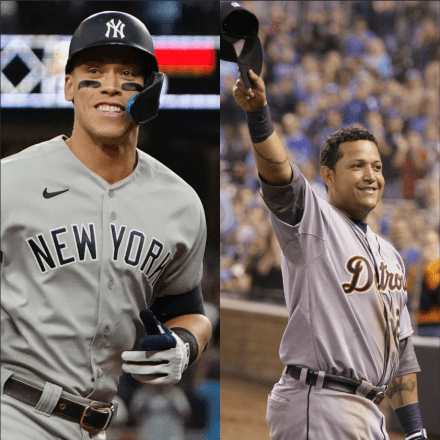
Aaron Judge just finished a season for the ages. He came 4 hits shy of the Triple Crown and will almost certainly win the American League MVP award, deservedly so, as he practically single-handedly carried a New York Yankees team that cratered in the second half of the season to the division title.

But since he didn’t win the Triple Crown, his amazing season will be boiled down to the fact that he hit 62 home runs, breaking the Yankees and American League records.

That achievement is largely meaningless.

Wait, what?

Yes, 62 home runs is amazing. There have only been 6 seasons (by 3 players) where someone hit more than those 62 dingers. But based on the media coverage, you would think he’s personally saved baseball by erasing the tainted marks of the steroid era and establishing the “real” home run record.

It’s absurd.

I could find you any number of articles and videos of otherwise intelligent journalists and talking heads arguing that Judge has now set the “real” record. Roger Maris Jr. famously proclaimed Judge to be the real record holder, as if his familial link to the guy who held the record for 37 years makes him the arbiter of baseball’s single-season home run champion, and not someone who just realized he’s lost any reason to be invited to games for free as the representative of his father’s achievement. But it was really one column that made my blood boil and inspired me to sit down and put together this post.

On Tuesday, before Judge had hit his 62nd homer, Eric Blum of Deadspin wrote a column discussing what a disappointment it would be if Judge couldn’t hit the momentous home run, and proclaimed that should he finish the job it would be the “biggest single achievement in baseball in two decades”. A great achievement? Yes. The “biggest single achievement in baseball in two decades”? Not so fast my friend.

History Lesson Part 1

Babe Ruth set the single-season home run record 3 consecutive years from 1919-1921 before setting the seemingly insurmountable record of 60 in 1927. That record stood for 34 years until Roger Maris hit 61 in 1961. His record somehow lasted longer than Ruth’s, until Mark McGwire (70) and Sammy Sosa (66) broke it 37 years later in 1998. McGwire would add a season of 65 homers in 1999, and Sosa would hit 63 in 1999 and 64 in 2001 before Barry Bonds came along and hit 73 in 2001 to establish the current Major League record, which has now stood for 21 years.

By the way, how much did it have to suck for Sosa to have a four season stretch where he hit 66, 63, 50, and 64 home runs, and aside from a 45-minute span where he beat McGwire to 66 home runs in ’98, he never held the home run record?

Defending the Triple Crown

Hitting 60 home runs is hard – it’s only happened nine times in the history of baseball. Hell, hitting 50 home runs has only happened 47 times, so I’m not diminishing what Judge has done this season. But almost as rare as the 60 home run season is the batting Triple Crown, which has happened 12 times since baseball recognized RBI in 1920, and the most recent winner broke the longest Triple Crown drought in the game’s history – longer than any gap between home run records being established.

So it should come as no great surprise that a blog that makes no effort to hide its obvious Detroit bias would dedicate a post to defending Miguel Cabrera’s 2012 American League Triple Crown as the “biggest single achievement in baseball in two decades”.

(In actuality, I’m going to argue that his 2013 follow-up season was the more impressive feat.)

Cabrera became the first player in 45 years to win the Triple Crown in 2012, finishing with a .330 average, 44 home runs, and 139 RBI. What people who are not obsessive fans of the Detroit Tigers may not realize is that his 2013 season was perhaps more impressive.

History Lesson Part 2

There have been 12 Triple Crowns in the American and National Leagues since 1920 (a significant starting point since it heralded the end of the dead ball era and the official creation of the run batted in). There were 5 Triple Crown seasons in the AL, NL, and the old American Association prior to 1920, as well as 10 Triple Crown winners in the Negro Leagues. Of those 27 seasons, only one man – Josh Gibson in 1936 and 1937 – won the Triple Crown in back-to-back seasons.

(Because of the shorter seasons in the “official” Negro Leagues and the pre-1901 Major Leagues, and the deadened ball that required a significantly different style of play prior to 1920, I am not considering these 15 seasons on par with the AL/NL achievements and thus not including any analysis here. If you don’t like that…well, you do the work.)

Of those 12 AL/NL Triple Crown Seasons, 9 were followed up by seasons where the winner finished in the top 10 in the 3 categories the next season, and 10 were preceded by such seasons. To determine how close someone came to repeating as Triple Crown champion, I added their finish in the respective statistical categories to come up with a “Triple Crown rank”. For example, someone who finished first in average, second in home runs, and third in RBI would have a Triple Crown rank of 6. The lower the number the better, with a Triple Crown winner having a rank of 3.

The closest anyone has come to winning back-to-back Crowns was Jimmie Foxx in 1932 and 1933. Foxx missed out on the Triple Crown in 1932 by 2 hits, losing the batting title to Dale Alexander by just over 3 points while leading the league in homers and RBI, before winning the Crown in 1933. Worth noting is that Foxx played all 154 games in 1932, while Alexander missed 30 games and had 248 fewer plate appearances than Foxx did. Kinda feels like the real Jimmy Dugan got the shaft.

Rogers Hornsby led in average and RBI in 1921, but missed out on back-to-back Crowns by 2 home runs, which preceded him achieving the feat in 1922. But in both the Foxx and Hornsby cases, the near-miss on the Triple Crown preceded them finishing the job the following season.

Among players looking to repeat as Triple Crown champion, prior to 2012, only 3 seasons saw someone register a Triple Crown rank of 10 or lower:

  • In 1948, Ted Williams won the batting title, and finished 14 HR and 28 RBI behind the champions. Not particularly close.
  • Frank Robinson followed up his 1967 Triple Crown by finishing second in average (5 hits shy), fourth in homers (14 HR behind), and third in RBI (27 RBI short) in 1968. Again, not a significant threat to go back-to-back.
  • Williams should be considered the closest to repeating as Triple Crown champion, as he followed up his first Crown in 1942 by finishing second in each category, 6 hits, 6 home runs, and 4 RBI behind the champions. There’s a caveat to that though: Williams’s follow-up season came in 1946, as he spent 1943-45 serving in World War II.

Back to Miggy

After Cabrera won the first Triple Crown in 45 years in 2012, he arguably had a better season in 2013. He hit the same number of home runs, had 2 fewer RBI, and improving his slash line from .330/.393/.606/.999 to .348/.442/.636/1.078. He repeated as batting champion, and finished second in homers and RBI. But his chase to repeat could have ended much differently.

On August 26 of that season, Cabrera trailed Chris Davis by 3 home runs, 46 to 43, and had 130 RBI to Davis’s 118. A repeat Triple Crown was within reach. But a nagging injury that required surgery following the season led to him hitting only 1 more home run and tallying just 7 RBI over the last 31 games of the season (6 of which Cabrera missed entirely). Miggy would miss fall 9 short of the home run title and lose the RBI title on the last day of the season, but his Triple Crown rank of 5 would be the lowest of any player looking to repeat the feat.

The Elephant in the Room

Back to the home run hitters. Obviously, I’m somewhat intentionally leaving out the significant fact that the three players who hit more home runs than Judge are all tainted by the steroids scandal of the late-’90s and early-2000s. I’m not naïve enough to pretend it didn’t happen or that they didn’t cheat. To do so would be idiotic.

But the fact is that the usage of steroids – while certainly illegal when Bonds, Sosa, and McGwire were playing – wasn’t tested for, and in fact was tacitly endorsed by Major League Baseball itself. MLB needed a draw to bring fans back to the game after the owner-forced players’ strike in 1994-95 wiped out the World Series, and a chase for the most hallowed record in sports was just the thing for people to fall in love with baseball again. Baseball was all too happy to embrace McGwire and Sosa in 1998, with the public vilifying a member of the press who pointed out that McGwire had a substance that is now banned (but was legal then) in his locker for all to see. It was only after steroids became a great public scourge that MLB would throw all the drug cheats under the bus, making no mention of the incalculable sum of money the owners (and players, to be fair) pocketed off all those home runs.

So the simple fact is, those homers happened. They happened against pitchers who were using steroids. Baseball has never made any effort to vacate the numbers from the steroid era. There are no asterisks. McGwire broke Maris’s record by launching 70 balls into the stands in 1998, and then Bonds one-upped him with 73 homers three years later. There’s no denying that those home runs happened. The purist can sit there and bloviate about how they don’t recognize the steroid cheats, but as long as I can go to Baseball Reference and see that Barry Bonds hit 73 home runs in 2001 and 762 for his career, those are the records.

(And don’t talk to me about the purity of the other records. Babe Ruth’s only at bats against black players were in exhibitions and Roger Maris was a lefty hitting to a right field fence that was 296 feet from home plate.)

Is 62 That Hard?

Now that I’ve so eloquently and obviously explained why Bonds is clearly the all-time home run champion, it’s time to go back and look at how impressive Judge’s achievement was this season, and whether it truly is the “biggest single achievement in baseball in two decades”.

Since Bonds hit 73 in 2001, guys like Giancarlo Stanton, Ryan Howard, Pete Alonso, Jim Thome, Andruw Jones, and Prince Fielder have all hit 50 or more home runs in a season. Judge himself did it in his rookie year, setting the rookie record (which Alonso would beat 2 years later). None of these guys have ever been accused of any kind of steroid link.

But wait, these guys hit 50, right? 50 is not 60 (that’s your math lesson for the day). No, it’s not, but let’s look at Giancarlo Stanton’s 2017 season. Stanton hit 59 home runs, 31 of them at home in a park that was less homer friendly compared to a neutral park. Judge this season hit 30 of his 62 at Yankee Stadium, which saw home runs hit at a pace just above league average. If you were to normalize them to a league average park, Judge could be expected to hit roughly the same number of home runs, but Stanton would pick up about 6 more home runs, so 62 was not out of the question.

Let’s go back to the McGwire and Sosa in 1998. Much like Maris did in 1961, McGwire and Sosa had their magical 1998 seasons in an expansion year. When expansion happens, there’s an influx of pitchers of lesser quality who would otherwise not be in the Majors; pitchers who otherwise wouldn’t be in the Majors result in more offense, and thus more home runs. McGwire broke Maris’s record by 9 home runs, adding 14.75% to the record. By contrast, Maris broke Ruth’s record by 1 home run, and that’s with an additional 8 games on the schedule (resulting in an asterisk actually being added to Maris’s record, albeit by a crony of Ruth’s who was bitter that the Babe’s record was broken). Were steroids a contributing factor to the number of home runs McGwire and Sosa hit? Undoubtedly. Is it as significant a factor as the reduction in quality pitching that came about because of expansion? I’m not so sure, so again, even if McGwire and Sosa were clean, 62 home runs was definitely in play.

Barry Bonds is tougher to defend. Bonds is arguably one of the greatest hitters that ever lived, but his peak came right at the height of his steroid use. Still, it’s well established that Bonds began using steroids in response to seeing McGwire and Sosa – 2 players he (justifiably) viewed as inferior to him – getting all the attention for breaking the home run record. It’s not unreasonable to think, even in a clean game, Bonds focuses his efforts toward home runs instead of being an all-around hitter, and makes a run at whatever the record stood at after 1998.

Simply put, even with no steroid taint on the guys ahead of Judge, I think it’s still highly likely that someone – if not multiple people – would have broken Maris’s home run record in the now 61 years since he set the record.

The Rarity of the Triple Crown

OK, but even allowing for assumptions that some players would have hit 62 home runs anyway, or would’ve done it in a different park, that’s still only 5-7 players who would have hit 62 home runs since Maris.

True, but since World War II, only 5 guys have completed the Triple Crown (Ted Williams in ’47, Mickey Mantle in ’56, Frank Robinson in ’66, Carl Yastrzemski in ’67, and Miguel Cabrera in 2012). While Ruth’s record stood for 34 years and Maris’s for 37, there was a 45 year gap between Yastrzemski and Cabrera, and no one has completed the Triple Crown in the National League in 85 years.

There have been close calls in that time. Jim Rice finished 3rd in batting average while winning the home run and RBI titles in 1978. Gary Sheffield made a run in 1992, but finished 2 home runs and 9 RBI short. Vlad Guerrero Jr. made a run in 2021 before falling short in average and RBI. Paul Goldschmidt and Judge led all three categories at points throughout the 2022 season, with Judge only losing his lead in average in the final week of the season.

But this just proves how difficult it is to pull off the feat, and what makes Cabrera pulling it off in 2012 (and almost doing it again in 2013) so impressive. When something’s only happened once in the last 55 years, I’m giving it my vote as the “biggest single achievement in baseball in two decades”. And I’d say that even if Judge had finished the job this year (twice in 55 years makes it only marginally less impressive) or if someone other than a Tiger had pulled it off in 2012.

So Why the Hype for 62?

Look, I’m not downplaying what Judge did this season. Hitting 62 home runs is not an insignificant achievement, and doing it while also almost pulling off the Triple Crown, on top of carrying your team over the finish line to the playoffs, makes it all the more impressive.

But his chase for 62 was not worthy of the press coverage it received. Once Judge got to 60, ESPN started to cut in to regular programming for every one of Judge’s at-bats, acting as though Judge setting the Yankee and American League records were worthy of such treatment. Would you expect this much coverage for someone setting the AFC single-season rushing record?

(Yes, I realize the baseball leagues have historically been more distinctly separate than the conferences from the other leagues have been, but we’re well past the point where an American League record had any great significance.)

ESPN, Fox, and Major League Baseball made untold millions covering and promoting the home run chase in 1998, and Bonds’s subsequent chases in 2001 and 2007. Then they made untold millions more covering the fallout from the steroids era (less so for MLB in this case). Now they’re making untold millions more acting like 1998 never happened, allowing their talking heads to feed the phony 24-hour sports news cycle by screaming like lunatics about what the “real” home run record is. It’s bullshit.

It’s pretty simple. Judge hit 62. Sosa hit 63, 64, and 66. McGwire hit 65 and 70. Bonds hit 73. Those balls aren’t coming out of the seats because you want to punish the players but not the league. Someone wants to pay $2 million for the Judge ball? Fine. I say they’re idiots.

And what Miguel Cabrera did was more impressive than all of them.

On Karma and Mike Ilitch

(Before I begin, it’s important to point out that I worked for the Ilitch family for five years.  None of what I write below has anything to do with my employment with the organization.  I left of my own free will.  This observation is based solely on my sports fandom and interest in the city as a whole.)

Sports Illustrated recently ran a story about spring training in 1995.  Included in that story was a tale about Sparky Anderson taking a stand and essentially ending his managerial career.  In his autobiography he called it his proudest moment.  In taking that stand he began to expose a little-known fact about one of the most beloved individuals in Detroit sports.

Mike Ilitch is kind of a dick.

Let’s start with a little history lesson.

In 1994, MLB owners decided that the finances of the game didn’t work for them.  Less than four years after being assessed damages of $280 million for colluding against free agents, the owners unilaterally decided that they would implement a salary cap.  The players balked – naturally, because salary caps are stupid – so the owners responded by refusing to pay a required $7.8 million to the players’ pension and benefit plan.  The players responded by going on strike, eventually leading to the cancellation of the 1994 World Series.

Early in 1995 the owners abandoned their salary cap plans; announced they would use replacement players (more on that shortly); abolished salary arbitration; centralized player negotiations with the commissioner’s office – which is bothersome on a number of levels that we won’t get into here; and ended an agreement not to collude on salaries.  The players filed an unfair labor practices complaint with the National Labor Relations Board.  Future Supreme Court Justice Sonia Sotmayor issued an injunction against the owners, the old agreement was put back in place, and the players returned to work.  An agreement was eventually reached in November 1996 and baseball hasn’t seen a work stoppage since.

Now back to those replacement players…

The owners announced in January that they would use replacement players for the 1995 season.  Apparently they were dumb enough to think fans were just as willing to pay to watch Kevin Millar, Pete Rose Jr. and a 48-year-old Pedro Borbon play as they were to watch Barry Bonds, Ken Griffey Jr. and Greg Maddux.  There were a few interesting side notes to the replacement player ordeal.  The Baltimore Orioles decided they wouldn’t use replacement players.  Depending on whom you ask, this was because Peter Angelos made the bulk of his money representing Baltimore labor unions and their members.  Realistically, however, it was probably because the use of replacement players would end Cal Ripken Jr.’s run at Lou Gehrig’s consecutive games streak and cost the team a significant chunk of money in ticket sales and merchandising.

The Toronto Blue Jays announced they would play their home games at their spring training facility in Dunedin, Florida, because Canadian law prohibited companies from using replacement workers during a strike or lockout.  That they were willing to play their games at a minor league stadium probably says something about their expected attendance numbers with the replacement players.

And Sparky Anderson decided he wouldn’t manage the scabs.

Tigers’ owner Mike Ilitch was livid, placing Sparky on unpaid leave.  To be fair, this was a somewhat charitable move by the team considering Ilitch wanted to fire Sparky on the spot.  After the season Sparky left the team, never to manage in the Majors again, despite the fact that he was still interested in managing and was only 61 years old.

In 2000 Sparky was elected to the Baseball Hall of Fame.  When deciding what hat to wear on his plaque, he chose the Cincinnati Reds, a team he had managed half as long as he had managed the Tigers and also a team that had fired him (say whatever you want about the Tigers, they never officially fired him).  People in Detroit were not happy.  The Tigers held a “Sparky Anderson Day” in 2000, though they didn’t retire his number (no one ever wore #11 after Sparky).

In 2009, the Tigers held a 25th anniversary of their last World Series championship.  Sparky appeared frail; it would be his last appearance in Detroit.  If the Tigers were going to retire his number, it would’ve been the perfect time.  They didn’t.

Sparky died in November 2010.  The Tigers retired his number in 2011.  I find it to be no small coincidence that Sparky’s number wasn’t retired until after he passed away.

And for that I blame Mike Ilitch.

I don’t think Sparky should’ve had his number retired.  But if they were going to retire his number, there was absolutely no reason not to do it when he was still alive.

I’ll explain.

Years back, very early in my love affair with baseball, I heard a tale that the Tigers did not retire numbers for the majority of their history because Ty Cobb was their best player, and he didn’t wear a number that could be retired.  That lasted until 1980, when Al Kaline’s #6 was retired shortly after his enshrinement in the Hall of Fame.  In 1983, Charlie Gehringer and Hank Greenberg had their numbers retired, with Hal Newhouser following in 1997.  Up until that time, the only Tigers who had had their numbers retired were not only Hall of Famers, but they went into the Hall of Fame as Tigers.

Willie Horton’s number was retired in 2000.  Bluntly, it was an affirmative action retirement.  It was believed that a city with a population that was over 80% black and a history of race issues should have a black player with his number retired.  Horton was a bad choice – among black players in Tigers’ history Lou Whitaker would’ve been the better choice – but he was a good enough player, he was a key member of the 1968 world champions, he was from Detroit and he supposedly walked through the Detroit riots in 1967 in his uniform trying to quell the violence.

(Incidentally, Ilitch once “unretired” the number of Larry Aurie with the Red Wings.  Save for a short time when Aurie’s cousin wore his #6 with the Wings in the 1950’s, no one has worn the number again, but Aurie is not honored with a banner in the rafters as the other Red Wings’ retired numbers are.)

Still, I’ve always lived with the notion that in order to have your number retired by the Tigers you had to go into the Hall of Fame as a Tiger.  This is likely another myth I was told by some random stranger when I was a child at Tigers games, because I can’t dig anything up to support that either.  But if you ignore Willie Horton’s number (and you should), the myth stood.  And because of that myth, and because Sparky Anderson went into the Hall of Fame as a Red, his number shouldn’t have been retired.

But retire it they did.  And they did it horribly.  And they did it because Mike Ilitch is a dick.

Sparky Anderson refused to manage replacement players when the owners were so devious in their negotiations that an unfair labor practice complaint was upheld, and Ilitch hated him for it.  I imagine deep within the recesses of the Ilitch organization, there was a decree that Anderson’s number would be retired only after he was dead.

Larry Aurie?  The Ilitches have never addressed it.  His family has repeatedly requested an answer, and the Ilitches have given them nothing.  The best explanation came from Wings’ vice president Jimmy Devellano, who said in a 1997 article that Aurie’s number wasn’t in the rafters because he wasn’t in the Hockey Hall of Fame.  If it’s really that simple, there’s no reason it should’ve taken 15 years – from the time Ilitch bought the team until Devellano gave his answer – for the family to get an explanation.  And there’s no reason it couldn’t come from someone in the family.

The Ilitch family is looked at as one of Detroit’s saviors.  To an extent they are.  They moved their corporate headquarters from the Detroit suburbs to a restored Fox Theatre in 1989.  They built a new ballpark for the Tigers downtown and encouraged the Lions to do the same.  They’re currently building a new arena for the Wings and headquarters for Little Caesars in their Foxtown district.  They have contributed a great deal of money to the Detroit economy.

They’ve also taken a great deal from it.

That ballpark was partially financed – to the tune of $115 million – by public funds, including Indian casino revenue.  Interestingly, Marian Ilitch – Mike’s wife – owns Motor City Casino in Detroit, a casino that is very much not Indian.  The new arena and downtown headquarters?  $285 million of the $650 million cost of that project will come from public financing.  That financing was requested from and approved by a lame duck state legislature at the same time Detroit was in the middle of the largest municipal bankruptcy in U.S. history.

They received 39 vacant parcels of land from the city for $1.  They paid $50 million buying out private owners in the area.

They refused to sign a community benefits agreement that would ensure a certain percentage of permanent, non-construction jobs at the arena went to Detroiters.

The Ilitches are reportedly worth $4.8 billion.

I understand this is business as usual in the sports world.  It doesn’t make it right.

The Ilitches have been working on a new arena for the Red Wings for some time now.  One of the worst kept secrets in the city was exactly where that arena would be built.  Hell, in 2000 the Ilitches opened Hockeytown Café in the Foxtown district, across the street from Comerica Park.  Hockeytown is a mile away from Joe Louis Arena.  It will be 2 blocks from the new arena.

Behind Fox Theatre and a block away from Hockeytown Café lie blocks of unpaved parking lots and abandoned unsightly buildings.

Sorry, that needs to be restated.

Behind Fox Theatre and a block away from Hockeytown Café lie blocks of Ilitch-owned unpaved parking lots and abandoned unsightly buildings.  When the new arena was announced, it was asked of the family why nothing had been done to develop those areas.  Chris Ilitch, Mike’s son and the current president and CEO of the family organization, gave a very simple answer: they couldn’t develop the area because doing so would have driven up the value of the surrounding areas that they were trying to acquire for the arena.

If it doesn’t benefit them, they’re not doing it.

There’s a building – or what’s left of a building – 2 blocks west of Comerica Park on Adams Street in Detroit.  All that’s left is the building’s façade that is supported by scaffolding that hangs over the sidewalk, a sidewalk that is travelled by hundreds of thousands of baseball fans when the Tigers are in town.  The remainder of the building was torn down because the organization would’ve lost a $2 million credit had they not pulled it down when they did.  As for the façade?  Well that’s still there because it’s still eligible for tax incentives for historical buildings.  It looks like shit and there hasn’t been work done on that building in years, but they’re keeping it just in case.

They’ll tear down their crumbling buildings, but they’re not going to pay for it.

I’ll say it again.  The Ilitches are reportedly worth $4.8 billion.

Now I’ll bet some of you are asking, “What does Sparky Anderson not getting his number retired until after he died have to do with the business dealings of the Ilitch family?”  To me, the answer is somewhat simple.

Karma.

I don’t know if karma exists.  You like to think it does, that bad people are going to get what’s coming to them.  But the more you watch the news and see that executives who play a huge rule in destroying their companies, not to mention the lives of the people who work for those companies, getting golden parachutes to leave, you start to wonder.  Personally, the greatest example of karma I’ve seen lately was when the Cowboys were screwed out of what was probably a legit catch that would’ve gone a long way toward winning their playoff game a week after they’d taken advantage of a horrendous call that helped them beat the Lions in the Wild Card game.  That’s about as simple as it gets.  Other people?  You never know.

But I look at Mike Ilitch and his family, and I wonder.

It is well known in Detroit that Mike Ilitch wants to win a title with the Tigers before he dies.  Now, if he hadn’t spent the first 14 years of his ownership basically ignoring the team, save for financing a new park and signing a couple of big name free agents when no one else would, he might have had that title by now.  But nevertheless, he wants to win.  And he spends to win.  And that spending has brought him teams that were legitimate title contenders.  His 2006 Tigers team collapsed in the World Series with a ridiculous comedy of errors and lost to a team with 83 wins.  I still contend the 2007 team was title worthy, but they collapsed in the last month of the season.  The 2009 team was done in by some horrendous decisions and at least one terrible umpire’s call in the infamous “Game 163”.  They had a chance in 2011, but the Rangers were probably better and you never know how they would’ve fared in the World Series against St. Louis.  In 2012 they got shut down in the World Series and scored a total of 6 runs in 4 games.  The 2013 team might’ve had the best chance of them all, but dumb luck, great pitching by the Red Sox and some bad fielding cost them a chance at the World Series.

Since 2006, the Tigers probably should have won at least 1 World Series, and to suggest that they could’ve won as many as 4 is not ridiculous (a bit farfetched perhaps, but not ridiculous).  And yet they have none.

The Tigers are becoming the Buffalo Bills (although in 3 of their 4 Super Bowl losses, the Bills really had no chance at kickoff).

There have been some questionable moves by Detroit management in the past few years.  Jarrod Washburn and Aubrey Huff didn’t work out, but there was no reason to think they wouldn’t, and it’s not like the Tigers gave up much.  They probably shouldn’t have cut Gary Sheffield before the 2009 season considering they were still going to pay him.  The Doug Fister traeidfhjpaetupaousljcmvajouiekjamnvas

Sorry, brief Doug Fister Trade Induced Seizure (it’s a legitimate medical diagnosis here in Detroit).

But the Tigers are not the Lions.  There have been far more good moves than bad.  When they made a bad move (Prince Fielder), they corrected it with a good one (dumping him for Ian Kinsler).  There’s no one calling for a team legend’s head because he used valuable payroll space to sign Charlie Villanueva and Ben Gordon.

So one wonders why one of these teams hasn’t been holding the trophy at the end of the year.

And I think its karma.  Mike Ilitch wants a title, and karma won’t allow it.

Pillaging the city and the state for public financing when he could’ve finance development with his own money?  Strike one.

Leaving large swaths of land that could’ve been developed dilapidated and rotting because it would’ve driven up your price to acquire other land?  Strike two.

Waiting until after Sparky Anderson died to retire his number?  Strike three.

And I’m not even bringing up the glorious managerial tenures of Buddy Bell, Larry Parrish or Luis Pujols, or the disastrous reign of GM Randy Smith.

I can’t say I don’t wish death on anyone – I have irrational hatreds toward guys like Roger Goodell and an unhealthy number of politicians – but I certainly don’t wish it upon Mike Ilitch or his family.  For as much as I don’t like what they’ve done to acquire land and finance their development, there’s no denying that his investment in the city has been a huge help.  It’s hard to imagine where Detroit would be without him.

But I do wonder if the baseball gods are looking down and seeing what’s gone on with this team and this city and said, “Nope, not while he’s around.”

Sparky Anderson dies.  The Tigers retire his number the following year.

Mike Ilitch dies.  Do the Tigers win his elusive title the following year?

Only time will tell.  I hope it doesn’t take that long.

Note: This post has been corrected to properly reflect the Ilitches’ net worth.  Forbes recently reported that they are currently worth $4.8 billion, not $3.2 billion as originally indicated.

The Perfect Ending

Sunday was the first without football since early September, and in an effort to be somewhat timely, I feel it’s important to discuss this past season before I wait 3 months to write something else in a timely fashion.

As seasons go, 2014 will go down in history as one of the worst in the history of the NFL, if not all of American professional sports.  Sure, in the League’s history, they’d probably say the strike years of 1982 and 1987 were worse.  And it’s hard to argue that this year ranks with the 1994 MLB season, which saw the cancellation of the World Series, and only Gary Bettman and the NHL would cancel an entire season.  But eliminate work stoppages, and this year’s football season was about as bad as it gets.

And the Super Bowl provided the perfect capper.

Let’s offer a quick recap.  The season really got off to its start in February, when Ray Rice knocked out his fiancee (now wife) and was caught on camera dragging her out of an Atlantic City elevator.  In July, Dictator…sorry, Commissioner Roger Goodell decided that seeing a guy dragging his unconscious fiancee out of an elevator after he’d knocked her out was only worth a 2-game suspension.  In September, TMZ released the video of Rice actually hitting his fiancee.  Shortly thereafter (as in, later that same day), the Ravens released Rice and the NFL suspended him indefinitely.  If you think it’s problematic that the NFL suspended a guy for an offense that they’d already suspended him for, congratulations, you’ve got more common sense than the NFL commissioner and really any of his advisors in the League office.

Four days after the Rice video surfaced, Adrian Peterson was arrested for beating the shit out of his 4-year-old son.  I won’t get into the ugly details of the case, but it’s safe to say that you’d think a guy who’s 6’2″, 217 pounds and is built to handle a football in the NFL 300-400 times a year probably could’ve found a way to discipline a 4-year-old kid without ordering the kid to bring Peterson a switch.  The Vikings “deactivated” him for a game, then ownership decided they wanted him reinstated, so they sent the GM out to make that announcement (despite the fact that the GM disagreed with that decision).  Of course, the GM did it in front of a backdrop that was covered in Radisson advertisements, so Radisson decided they were going to pull their sponsorship of the team.  Ownership then stepped up and decided to “deactivate” Peterson indefinitely (never question the power of the almighty dollar) and Peterson was put on the Commissioner’s exempt list, with pay.  After he pleaded his case out, a representative of the NFL told Peterson he would get a 2-game suspension, with time on the exempt list being credited against that suspension, only to have Goodell suspend him for the remainder of the season, with no consideration for time served.

Rice and Peterson aren’t what you would consider sympathetic figures, and Peterson’s behavior after he was deactivated probably had a lot to do with his punishment.  But look at the way the NFL treated the punishment process – to say they made it up as they went along insults the people who truly are making stuff up as they go along – and left the players union out of that decision-making process paints the League in a truly unflattering light.

So as these two cases hung over the League for quite literally the entire season, the playoffs went exactly how you would expect: with no one speaking about what happened on the field and instead talking about incompetent officiating, deflated footballs and the dumbest play call perhaps in the history of the League.

In the Wild Card round of the playoffs, the Lions led by 3 at Dallas with just over 8 minutes to go in the game.  On 3rd and 1, Matthew Stafford dropped back for a pass to Brandon Pettigrew, who was both held and interfered with on the play.  The refs threw a flag, Dez Bryant ran on the field to complain, and then the refs picked up the flag without calling a penalty.  Not for the hold, not for the pass interference, not for the hothead running onto the field to complain to the refs.  It’s not quite fair to say that this one play cost the Lions the game – they scored 3 points in the second half, Jim Caldwell decided to kick the ball away on 4th and 1 instead of trusting his defense, and Sam Martin unleashed a 10-yard punt at the worst possible moment – but being in field goal range with a fresh set of downs would’ve made the Cowboys’ job a lot harder.

cowboyspi-copy

The following week, as if to prove that karma exists, the Cowboys got screwed by a bad rule (although not a bad call).  Dez Bryant made what should’ve been regarded as one of the best and most clutch catches in NFL postseason history to give the Cowboys 1st and goal inside the 2-yard line.  Instead, an idiotic rule that burned the Lions in 2010 was called – correctly – the Cowboys gave up the ball on downs, and the Cowboys lost a game that they might otherwise have won.

In the conference title game, the Packers collapsed, blowing a 12-point lead with just over 2 minutes left in the game to send Seattle to the Super Bowl.  Meanwhile, the Patriots destroyed the Colts, winning 45-7, but the big news became the fact that the Patriots were using footballs that were deflated to less than the NFL’s minimum requirements.  The fact that the NFL used properly inflated balls for the second half of the game, a half in which the Patriots outscored the Colts 28-0, seems to be irrelevant.

(I saw an interesting theory prior to the Super Bowl that the Lions’ curse contributed to the Seahawks making the Super Bowl.  The theory went that the curse transferred from the Lions to the Cowboys on the pass interference that wasn’t, then from the Cowboys to the Packers on the Dez Bryant catch that wasn’t, then from the Packers to the Seahawks on their last-minute collapse.  Considering how the Super Bowl ended, it’s somewhat difficult to disagree with this theory.)

After the Wild Card round we talked about officiating.  After the Divisional round we talked about stupid rules.  After the Conference title games we talked about deflated balls.  So it’s fitting that the Super Bowl ended with a terrible play call and a brawl.

The general discussion surrounding the NFL for the past few years has related to things happening off the field.  Concussions, domestic violence, the general incompetence of the Commissioner.  Very few discussions have included the play of the players.  The only real discussion related to the play on the field this season became whether or not Tom Brady has cemented his place as the greatest quarterback of all time.  It’s not a ridiculous discussion, but it’s interesting that we probably don’t have that discussion if Pete Carroll calls for a handoff to Marshawn Lynch instead of having his QB throw it over the middle.

It hasn’t changed since the Super Bowl.  On top of the Pete Carroll play call, we’ve heard about a texting scandal that could bring about fines and suspensions to the Cleveland Browns, not to mention the year-long suspension of their star wide receiver and the story that their supposed QB of the future is in rehab.  Oh, and four more players have been arrested this week, on charges ranging from drug and gun possession to assault to animal cruelty.  The NFL is nothing if not consistent.

There’s nothing to suggest the NFL is going anywhere.  The viewership hasn’t changed, attendance isn’t down, and no advertisers have walked away.  So as bad as this season has been, not much will change.  But if we see many seasons where the discussion isn’t about what the players did on the field but rather what they did off the field, the number of kids playing the game might continue to drop.  There was a time when boxing and horse racing were on par with baseball; now they’re niche sports.  Is it realistic to think that the NFL is headed that way?  Probably not.  But stranger things have happened.

Let’s just hope that there aren’t many more seasons like this to help advance the NFL’s demise.

Why Sports?

As a lot of you (translation: my dad) have noticed, I haven’t written in a while.  There are a lot of reasons for this.  Work doesn’t like it when I spend time writing for my personal blog, I like to drink, TV has some really cool stuff going on, I like to drink and I’m also pretty damn lazy.  Also, I like to drink.  But in reality, it might come down to one damning thing.

Sports just aren’t as fun anymore.

Let’s do a little history lesson.  First off, I didn’t get “big” into sports until my dad had moved away to Illinois.  This isn’t any criticism, but there really wasn’t any history of me sitting on the couch watching my dad get pumped up about the Bears, so a lot of my loyalties have varied and the start of my histories with certain sports tie in to when local teams were good.

Now that you know that…

I got off to a good start.  My first sports memory was the 1984 Tigers winning the World Series.  I didn’t have much of a memory of that team, but I do remember the end of that final game.  From there it was on to the ’85 Bears, whom I picked up with my dad and will still argue are the best team of all time.  In ’87 Michigan State’s football team went to the Rose Bowl for the first time in over 20 years.  In ’88 the Pistons should’ve beaten the Lakers in the NBA Finals, and in ’89 they did.  That same year Michigan fired their basketball coach then won the NCAA basketball title (at that age you could switch collegiate loyalties as often as you changed underwear, so at least once a week).  In 1989 the Lions drafted the greatest running back not named Jim Brown; in 1991 they were a win away from the Super Bowl.

And those were just the local teams.  For some reason I liked Jose Canseco, so I watched the A’s win the Earthquake World Series in ’89.  That same year – as with all summers from the time I was 10 until I was 16 – I spent the summer at my dad’s place in Illinois and watched the Cubs on WGN every afternoon.  They went to the playoffs that year and I’ve been a fair weather Cubs fan ever since.  I loved Joe Montana, and I watched the 49ers win Super Bowls 23 and 24 as Montana cemented his legacy as one of the greatest quarterbacks of all time.  My brother picked up hockey and the New York Rangers in 1994, so I learned the sport along with him (while wondering why Chris Osgood left the net).  And perhaps the biggest “betrayal” for any Michigan sports fan: in 1993 I discovered my dad was a Bulls fan and picked them up when the Pistons were down.  I stuck with them through the 72-win season in ’96, although the Dennis Rodman pickup helped me justify that one.

By 1997, the Red Wings had gotten off the schneid, beaten the shit out of the Colorado Avalanche, and would win 4 Cups in just over a decade.  The Pistons got over the teal era, and won one of the more unexpected titles in NBA history while going to 6 Eastern Conference Finals in a row.  The Tigers got over 13 consecutive losing seasons – including the worst year in American League history – by going to the World Series on a walkoff home run by Magglio Ordonez.  Michigan State’s basketball team capitalized on sanctions at Michigan and went to 4 straight Final Fours and won the national title in 2000 (my collegiate loyalties were locked in when I decided to go to East Lansing to study journalism for 6 weeks before I found out what journalists make).  The Spartan football team became a power and we’ve won 10+ games 4 times in 5 years, won a Rose Bowl, don’t measure our success on whether or not we beat Michigan, and talk about national titles without being called delusional.

I even gave up on the 49ers and shed my fair weather reputation when they fired Steve Mariucci and became a full-time Lions fan.  Then the Lions hired him and I completely understood what the 49ers were doing.  But while the Lions went through a stretch that would rival or even exceed the stretch the Tigers put us through, they weren’t contracted or moved, they didn’t have the Thanksgiving game taken away from them and they’ve even made the playoffs.

Things were good.

But dig deeper and it’s not hard to poke holes in the facade.  For a sporting society that lives on the idea of “Second place is the first loser”, a 4-team city (not counting the 2 Big 10 schools in the area) that hasn’t won a title since 2008 – with no teams that scream out that they’re favorites to win anytime soon – doesn’t leave a fan happy.  The average title drought for the teams in this city is over 26 years (the Lions surely don’t help that average), and within those droughts are some painful sporting legacies:

  • Tigers: David Ortiz’s grand slam in the 2013 ALCS, six total runs scored in 2012 World Series, pitchers forget how to field in 2006 World Series
  • Lions: only team to go 0-16
  • Pistons: team wide mutiny after starting 37-5 in 2006 Eastern Conference finals, destroyed by LeBron games in 2007 ECF, utter disaster of Charlie Villanueva and Ben Gordon deals
  • Red Wings: blew 3-2 lead to lose 2009 Stanley Cup Final

But that’s not it.

Should the Tigers have won a World Series by now?  Probably.  Should the Wings have repeated in ’09?  Possibly.  Could the Pistons have won more than 1 title in their 6-year run?  Definitely.  Should the Lions…hmm…um…

Every city’s got one of those teams.

And yes, these things start to wear on fans.  This isn’t the World Cup where a tiny country can be thrilled that not only did they qualify, but they also played a powerhouse to a scoreless draw.  Or the Olympics, where we watch a guy almost drown while simultaneously celebrate his ability to complete.  This is America.  We don’t just go to enjoy the games, we pull for our teams to win championships and we know exactly when the last time it happened for all of our states (1957, 1984, 2004, 2009).

But no, it’s not the woulda-coulda-shoulda that takes the fun sports.  In fact, to a large extent that’s exactly what makes it fun.

But it’s not that either.

Everyone in America watched the Great Home Run Chase of 1998.  We watched as this man who seemed destined for years to break the most hallowed record in American sports fought off a personable upstart, and then hit the magical mark of 70, a mark that seemed almost as unbreakable as the 60 that Babe Ruth hit in 1927.

Then 3 years later someone else hit 73.

I, like everyone else, was blinded to the fact that Mark McGwire, Sammy Sosa and Barry Bonds were chemically enhanced when they broke the record.  And as the years went on I didn’t much care, because it turned out that everyone in the game was juiced.  I care that it was clear that those chemical enhancements cheapened that magical summer, that 73 isn’t anywhere near as romantic as 60 or 61*, that there are many who still believe that 755 is the home run record.

But no, that’s not quite it either.

It’s who I’m giving my money to.

As I’ve said before, I believe sports owners to be among the most despicable people on earth.  The history of professional sports is littered with stories of owners doing whatever they could to pay the players – the people the fans are coming to see – as little as possible, to treat them as chattel, to restrict their rights, to control what they wear.  It continues to this day, with the NFL fining players $10,000 for wearing Beats headphones to mandatory post-game press conferences.  “Guys, we know Beats is the big thing now, but we’ve got a contract with Motorola which, believe it or not, is still in business.”  And yet somehow the fans paint the players as greedy whenever there’s a work stoppage.

But no, we’re still not quite there.

No, it’s the fact that these people I give so much money to – and I’ve given a ridiculous sum of money to professional sports owners over the years – not only don’t give a fuck about anyone to whom they’re responsible (fans, players, employers, families, etc.), but they think we’re stupid enough to buy their shit.

That’s it.

I started thinking about this post as I boatgated before the first game of the Lions’ season.  It was that day that the infamous video of Ray Rice knocking out his now wife went public.  The Ravens acted quickly, cutting Rice.  The NFL was in a bit of spot, because they’d already determined that watching a guy dragging his unconscious fiance out of an Atlantic City elevator was only worth a 2-game suspension.  Nevertheless, the League suspended him again, a suspension that has been reversed because it turns out that you can’t suspend a guy for the same action when the only thing that changed was that the whole world saw what you’ve already clearly known.

Over the next few weeks I watched intently as Roger Goodell insisted they hadn’t seen the tape when they clearly had.  As Vikings ownership suspended Adrian Peterson for beating the shit out of his 4-year-old son, then activated him, then suspended him again when advertisers yanked their support.  As the NFL somehow made people who had beaten their wives and children into sympathetic figures.

Sports just didn’t really feel great anymore.

That was over 3 months ago.  I sat there watching that video thinking to myself, “Do I really want to support this company anymore?”  When does the NFL become Wal-Mart, or Apple, or GM?

Including that Monday Night game, I’ve been to 4 NFL games since then.  I am the problem.

The NFL handed out painkillers and steroids like they were tic-tacs until Lyle Alzado died of a brain tumor and went public believing that the two were related.  They fought the disability claims of players who were living in their cars with dementia caused by constant helmet-to-helmet collisions.  They ignored the somewhat obvious fact that concussions could have long lasting impact (you know, beyond the 3 plays that the NFL thought they had), despite the fact that concussion issues were a plot point in Varsity Blues, which came out in 19-freaking-99 (thanks Bill Simmons…asshole).  And now they’re trying to convince us they’re concerned about domestic violence while giving a 2-game suspension to a guy who knocked out his wife and then dragged her out of an elevator.

Hell, we can’t even escape politics on the field.  When players throughout the country have expressed their Constitutionally-protected right to express their opinions (whether the venue for those opinions were appropriate is for everyone to decide on their own) about high-profile police killings they’ve gotten shot down by fans and police spokespeople.  Never mind that it was members of those police departments that led to the demonstrations in the first place.  No, it’s the young black man – and it’s always a black man – expressing his opinion who’s the problem.

And yet through this entire mess, the NFL has lost not one single viewer.  Not even me.  The only Lions games I’ve missed this year were because there were more important Tigers games taking place at the same time.  And until they start losing viewers (and, more importantly, money), what the NFL does about these public relations disasters won’t matter.

Sports have just gotten less enjoyable.  I’ll get enraged by people at the bar who have differing opinions about trades the Tigers have made.  I’ve had the text message equation of a knock-down, drag-out brawl with a friend of mine who suggested I had gone off the deep end because of how I felt about Brad Ausmus’s bullpen usage.  I was genuinely afraid he was going to have a stroke, which leads me to believe he’s got a mindset about sports not far off from mine.

Which brings me back to the whole point of this post.  Why sports?

And then I think of this picture.

2014-10-26 16.42.24-2 (2)

That’s what sports is.  That’s a picture taken after the Lions had beaten the Falcons in London on a last-second field goal in October.  My friend and I hadn’t been getting along all that great, mostly because I’ve got thin skin and take things personally.  But after that game, we just celebrated and chatted with foreign (wait, I guess we were the foreigners) football fans in a magnificent stadium.

It’s an excuse to travel to see  faraway friends, like the friend who moved to Germany for business.  That’s why we were in London in the first place.  Without the Lions, I don’t know if we’d make that trip.  You’d like to think that friendships survive thousands of miles, but you don’t know.  Having your teams to talk about makes it easier.

It’s complaining with your dad over text about our football teams.  It’s a bit hard to be sympathetic to his plight.  As bad as the Bears have been, they still have 1985.  While I haven’t been a full-time Lions fan since birth, geography has required me to follow them since I’ve been watching football.  We don’t talk on the phone much anymore – why bother when texting and email is so much easier – but every Sunday we text about our teams.

Talking to strangers has always been an issue for me.  I can’t talk to women.  It’s a crippling issue that has kept me single far longer than I’d like.  But I can inject myself into a random conversation about the 2002 Fiesta Bowl or whether Roger Clemens belongs in the Hall of Fame like it’s nobody’s business.  I spent a long chunk of my life feeling weird about myself, and being involved in a sports conversation makes me feel normal.

So I guess that’s why sports.

My Confusion with the Steroid Era

23044984_BG3

In 1998, after a game in which he hit one of his 70 home runs, a reporter noticed a bottle of androstenedione in Mark McGwire’s locker and naturally asked about it.  The reporter caught the 5th degree for asking about a substance that was banned by numerous sporting agencies, but not MLB.

Today, 12 players were suspended 50 games, and Alex Rodriguez for 211, for their links to the Biogenesis lab in Miami.

While it’s unlikely that there will ever be a beginning and end of the steroid era in baseball, to me there’s something about these two events that strike me as similar to the Nazis marching into Poland and the Battle of Berlin.

(I realize it’s a horrible analogy…work with me here.)

I’m torn on the PED issue in sports.  In the 1960’s, if you tore your ACL, your career was pretty much over.  Today it costs you a hear, but your career goes on.  When Tommy John blew out his elbow, his surgeon game him a 1 in 100 chance of pitching again.  Now the surgery’s named after John (I feel like Frank Jobe got gypped there and it’s forgotten that John won 288 games) and kids in high school and college have the surgery done as preventative measures.  Hell, you can get laser eye surgery and have 20/20 vision in a week now.

Can someone explain to me how these aren’t “performance enhancing”?

I get it…drugs are bad.  But are they?  What are the downsides to HGH?  Joint swelling…joint pain…carpal tunnel syndrome…an increased risk of diabetes.  It may also be a risk factor for Hodgkin’s lymphoma, which sounds a little shitty, but your survival rate is over 80%.  My question is this: if those are your potential side effects, and using this drug is the difference between being a career minor leaguer and making the big leagues and pretty much set for life, wouldn’t you at least consider taking it?

I think if you say no you’re lying.

I get that steroids are the scourge of professional sports world, but I imagine that most people who get on their high horse about steroids would quickly take a drug that would put them into their next echelon of their given occupation.  If you wouldn’t, you’re a better man than me.

So maybe I’m not torn.

I have no morals when it comes to sports (well, aside from college sports, but that’s a whole other discussion).  I’ve long said that if it meant the Tigers would win the World Series I’d root for a team with Hitler as their ace and Stalin as their cleanup hitter.  So considering the fact that one of the players suspended today was Jhonny Peralta, the All-Star shortstop for my beloved Tigers, one might take this post as excusing Peralta’s behavior.  I’m not.  Whether testing has been in place or not, steroids have been illegal in baseball since at least 1991, and Peralta was selfish and unfair to his teammates and fans.

But I find myself thinking back to 1998.  Baseball was still recovering from a strike that had wiped out the World Series for the first time since 1903.  Cal Ripken chased down Lou Gehrig’s consecutive games streak in 1995, but it was the home run chase of 1998 that saw the country cheering for Mark McGwire and Sammy Sosa to break Roger Maris’s single season home run record.  When they both did so, and both soared past Maris’s 61 home runs (with 70 by McGwire and 66 by Sosa), it was chalked up to unqualified pitchers resulting from expansion (not unlike Maris’s own record chase in 1961).  McGwire hit 65 in 1999.  Sosa averaged 61 from 1998-2001.  Even after that breakout, after seeing McGwire’s physique explode and the banned substance in his locker, people were inclined to think the ball was juiced.  After all, home runs across the game were up.

It wasn’t until an angry, jealous black man broke McGwire’s record a scant 3 years later that the steroid talk really exploded.  Sure, McGwire looks like he’s twice the size of his rookie card, but look at the size of Barry Bonds’s head!  He must be juicing!  (He was, but so was pretty much everyone else.)  It brought us farcical Congressional hearings where Jose Canseco provided the most trustworthy testimony.  It brought us the Chicago White Sox (aka Frank Thomas) threatening to boycott investigative testing to trigger actual testing with (toothless) punishment.  It brought us the Mitchell Report, which found an employee of the Red Sox performing an investigation into steroids in baseball while – shockingly – going light on the Red Sox.  It brought us ridiculously expensive prosecutions of Barry Bonds and Rogers Clemens, neither of whom ever did a day in prison (nor should they have).  And it gave us the absurdity of the Yankees clearly orchestrating an extended suspension of Alex Rodriguez because they signed him  to an equally absurd contract.

It’s all been quite ridiculous.

Does that make it wrong?  Congress called for hearings under the guise of it being a public health crisis.  Apparently teens were watching their heroes take steroids, taking them themselves, and the side effects were causing suicides (never mind the fact that these kids were probably troubled in the first place.  Don’t get them help, blame the baseball players!).  Barry Bonds was convicted of perjury (you can debate the legitimacy of the prosecution all you want, but he was convicted).  There was a witch hunt against A-Rod because, well, A-Rod is a massive douchebag.  And let’s not kid ourselves.  Baseball is cleaner now than it’s ever been.

And to go further, it’s cleaner than every other sport?  The NFL voted in HGH testing during the last collective bargaining agreement in 2011.  The only problem is that they can’t agree on testing, which pretty much means that the entire league is on HGH.  And you’re not going to convince me that hockey and basketball, both significantly more physical games than baseball, have no issues with performance enhancing drugs.  Just because we haven’t heard about it doesn’t mean there’s not an issue.

The dirty little secret about performance enhancing drugs is that they work.  So does Tommy John surgery and knee reconstruction.  Only PED’s aren’t allowed.

And I find that very confusing.

Fixing Team Names

image

The NBA regular season is over, and since I’m somewhat (completely) fair weathered when it comes to pro hoops and the Pistons don’t just suck but are a complete and total embarrassment to the city, there’s only one thing I care about…and it ain’t LeBron or the Lakers.

The New Orleans Hornets are no more!

It’s always bothered me when teams move to a new city – and have to rebrand anyway – and they don’t go through the trouble of changing the team name.  So we get ridiculous names like the Utah Jazz, Memphis Grizzlies and Oklahoma SuperSonics…oh, wait.  Theoretically team names are supposed to reflect the culture of the cities they play in, but the closest Grizzly Bear to Memphis is either in a zoo or 1300 miles away, and let’s not even talk about a style of music that is predominantly black providing the nickname for a team in the whitest state in the country.

So I’m fixing that.

Here’s the rules:

  • We’re only changing the nicknames of teams that have changed during the respective sport’s current “eras”.  For baseball, that’s the expansion era (1969-present).  For the NFL (1970), NBA (1976-77) and NHL (1979-80), this refers to the time since their mergers.  So teams like the Oakland A’s and Los Angeles Lakers lucked out, even if their names make no sense.
  • Team names stick with the city (a la Cleveland Browns, Seattle SuperSonics, etc.).  If a second team comes to that city, they are eligible to adopt that moniker.
  • They haven’t moved, but we’re going to address Native American names, which means that the Redskins will be getting dealt with.
  • I don’t have a problem using a nickname that is currently in use in another sport.

That’s it, it’s that simple.  It should be noted that while I tried to research some of the cities’ histories in their respective sports to come up with names, but in the end, I’m an accountant with no creativity, and my buddy Jeff came up with a bunch of these names.  I think you’ll like them.

MLB

There’s literally no corrections to be made.  Only three baseball teams have moved during the expansion era: the Seattle Pilots became the Milwaukee Brewers in 1970, the Washington Senators became the Texas Rangers in 1972, and the Montreal Expos became the Washington Nationals in 2005.

Good on you baseball!

NFL

Not a ton of movement, but enough that teams require some adjustment.  In fact, only one team that’s moved recently has done it right and rebranded themselves, and even that was after the Titans spent 2 years as the Tennessee Oilers (interesting fact: the Oilers nickname has since been retired by the NFL…I have no idea what that means, but I find it interesting).

Also, I’m not addressing the Raiders, since they were originally the Oakland Raiders.  And since the San Diego Chargers were originally the Los Angeles Chargers, they can keep their name when they move in 2 years.

  • Arizona: There are a lot of opportunities here.  Vipers, Cobras, Wolves, Rattlers and Pythons all work, but they’d seem to be redundant with the Coyotes and Diamondbacks.  The Roadrunners would be an utterly fantastic tie-in with the Coyotes, but I can’t imagine it would ever fly with the stodgy NFL.  To me, there are two options: Firebirds (it continues the bird theme from the Cardinals) and Apache/Apaches.  And since Arizona is the Apache State, we’re getting permission from the tribe and calling them the Arizona Apache.
  • Baltimore: Theoretically they’d get to revert back to the Baltimore Colts when they stole the Browns from Cleveland.  But in a way, that would be a reward for doing the exact same thing to Cleveland that they spent years bitching to Indianapolis about.  Plus, Ravens is a better name and tie in better with the city.  They’re staying the Baltimore Ravens and will be the only team in this exercise to keep their nickname.
  • Indianapolis: There are two options here.  One, stick with the horse theme (Mustangs, Stallions, Thoroughbreds, etc.).  Two, you go with the racing theme, which is really the only thing Indianapolis is known for (Racers, Fuel, Turbo, Wings, Spoilers, Aeros, etc.).  But again, the Pacers already cover that, and I don’t feel like those nicknames really fit with the boring standards of the NFL.  So we’re going with the Indianapolis Stallions.
  • St. Louis: this one’s simple.  The Los Angeles Rams are the second (third?) incarnation of the St. Louis Cardinals. ‘Nuff said.
  • Washington: They moved from Boston in 1936, but that’s not why we’re addressing the elephant in the room.  Let’s face it, you can’t do a post about changing sports team nicknames and leave the Redskins out.  If the Redskins’ history weren’t so sordid, maybe they’d get a pass on the most blatantly racist team name in sports.  But they had to be forced to integrate by the federal government, they proudly played as “the South’s team” for years (back when the South was opening fire hoses on blacks marching for civil rights), and they intentionally changed their team song to reference Dixie instead of D.C. (thank God that’s been changed back).  This team’s history sickens me.  Let’s just do this quick and easy, change the team name to the Washington Pigskins and be done with it.  Tradition is no excuse for bigotry.  I’m glad this team is run by an unlikeable prick like Dan Snyder.

NBA

The NBA is just a disaster.  The only reason Oklahoma City became the Thunder is because of the public relations disaster that happened in Seattle (again: Oklahoma City…Seattle…Sacramento…do unto others what has been done to you).  Let’s just start, because there, I think some pretty good ones.

  • Brooklyn: theoretically the Nets are just in keeping the nickname, because they were the New York Nets when they came over from the ABA.  But that’s no fun.  What sucks is that Brooklyn Kings would be a really cool nickname, especially because Brooklyn is in Kings County.  But the Kings nickname belongs to Kansas City where the current Kings played before they moved to Sacramento, and we’re not changing the rules.  Besides, with the “cool” factor that is Brooklyn and the fact that a rapper helped move them there from New Jersey, we’re calling them the Brooklyn Ballers.
  • Charlotte: Wait a second!  The Bobcats have broken none of the rules.  They entered the league as the Bobcats.  Why change the name?  First, because Bobcats is boring, and it’s rumored that the team was named after the original owner, Robert Johnson.  Plus, now that the Hornets nickname has been abandoned, and the Hornets name dates back to the Revolutionary War in Charlotte, we’re giving the name back.  We’ve got the second iteration of the Charlotte Hornets.
  • L.A. Clippers: There are tons of problems with the Clippers, starting with their racist owner who would never spend a penny to go through a massive rebranding effort.  But let’s ignore that for now.  The first problem with the Clippers nickname is that it’s a great nickname for when they were in San Diego, where there’s a massive sailing community.  In L.A. it makes no sense.  But the other problem is that by just changing the city name, they’re going up against the Lakers, and you’re never going to top the Lakers in L.A.  So we’re taking the Los Angeles out of the Clippers and coming up with a name so awesome that there’s no way I could’ve possibly come up with it myself (and I didn’t).  Can you imagine how many units a Blake Griffin Hollywood Stars jersey would move?
  • Memphis: Memphis Soul and Memphis Blues would be cool nicknames…way cooler than having a name that made more sense in Vancouver.  However, we’re sticking it to David Stern with this one.  Back when the Grizzlies were planning on moving, they explored the option of selling the naming rights to the team (not just the stadium, the entire team).  One of the options was for the team to move to Louisville and be called the Kentucky Colonels (sponsored by KFC).  The other would’ve had them moving to Memphis and being sponsored by FedEx.  Stern put the kibosh on that, to which I say fuck that.  The Memphis Express will be the first team to sell the naming rights to the team (most assuredly not the last).
  • Sacramento: Theoretically we should ignore the current Kings since they’re likely to move to Seattle next year and become the new Seattle SuperSonics.  But that’s no fun, is it?  Plus, I think Sacramento has one of the coolest names my buddy came up with.  Sacramento, much like San Francisco, was a boom town during the California Gold Rush, so we’re going to call them the Sacramento Prospectors.
  • Utah: Changing the team’s name is a no-brainer, because if you ask any sports fan in the country what team name needs to be changed the most, Utah Jazz is going to be second (see: Redskins).  The tricky part is figuring out what to go with.  Saints would be a good shout out to the importance of the Mormon faith in the state, while Miners would be a good marker of an important piece of the state’s economy.  I said we would use nicknames that were in use by other teams, but I didn’t say it was required.  And the fact that there’s already a Saints team out there means we’re calling them the Utah Miners.

NHL

The NHL generally does things right.  The Quebec Nordiques became the Colorado Avalanche, the Atlanta Thrashers became the Winnipeg Jets, etc.  There’s one small exception.

  • Calgary: The Calgary Flames started out as the Atlanta Flames and kept the nickname when they moved north.  I wonder why a team named after the city burning down didn’t work out in Atlanta. How well do you think a team named the Detroit Riots would do financially?  If Calgary hadn’t been relatively successful, I’d say the team name was cursed…then again, they did lose the Stanley Cup to the Tampa Bay Freaking Lightning and then the sport did shut down for a year.  So maybe.  Sorry…digression.  There’s only one thing of note in Calgary, and that’s the annual Stampede, which is one of the world’s biggest rodeos.  I know there’s already a CFL team named the Stampeders, but (a) that’s the CFL, and no one cares, and (b) the CFL once had teams named the Roughriders and the Rough Riders playing at the same time.  They can deal with having a hockey team called the Calgary Stampede.

Wasn’t that fun?  Tell me you wouldn’t prefer those names over at least some of the ones we’ve got now.